Charles Dickens, a Marvellous Delineator of Childhood
December 7, 2023
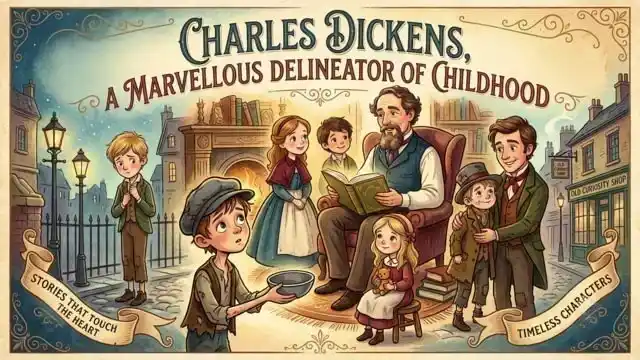
Charles Dickens is universally acclaimed as one of the greatest novelists in English literature and an unparalleled interpreter of human life.
Read moreCome into the Garden, Maud—Summary and Critical Appreciation
November 30, 2023
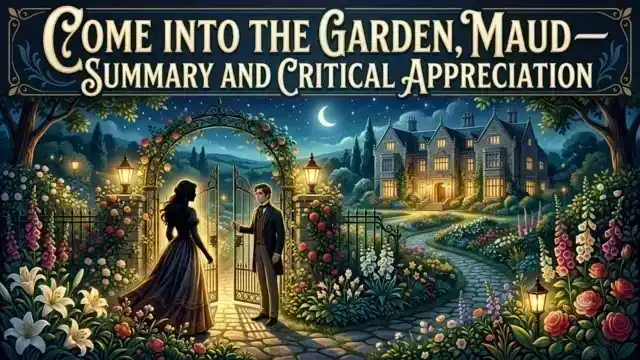
The poem “Come into the Garden Maud” is a love poem in a series of lyrics entitled “Maud; a Monodrama.”
Read moreG.M. Hopkins as a nature poet of Early 19th Century
November 21, 2023
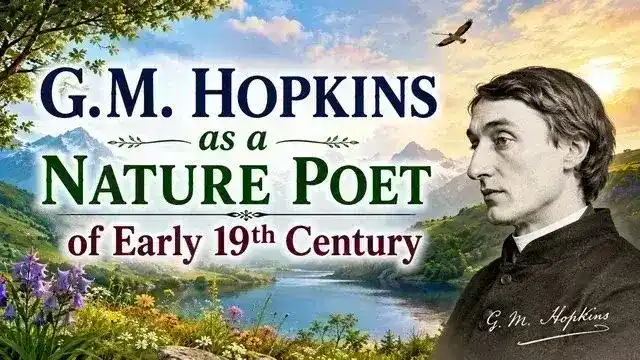
Although Gerard Manley Hopkins (1844–1889) is often mistakenly associated with the early nineteenth century, he actually belongs to the late Victorian period of the nineteenth century.
Read moreSonnet Thou Art Indeed Just Lord by G.M. Hopkins— Summary and Critical Appreciation
November 17, 2023
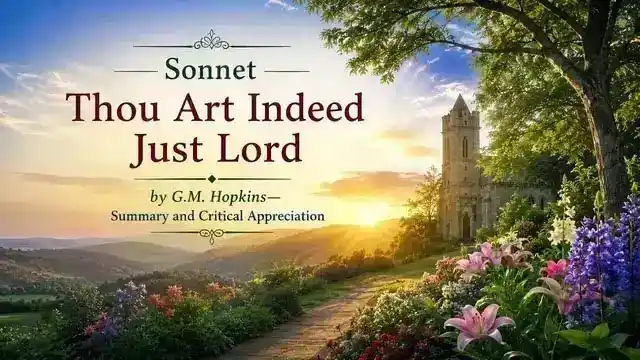
The sonnet entitled "Thou Art Indeed Just Lord" was written on March 17, 1889. During that time, the poet was suffering from a sense of utter despair because he remained unsuccessful in the sphere of composing good and impressive poem.
Read moreG.M. Hopkins’ Poem Pied Beauty— Summary and Critical Appreciation
November 16, 2023
The poem “Pied Beauty” is a “Curtal” Sonnet with ten and one half lines. It is a devotional poem in the form of lyric.
Read moreThomas Hardy’s Poem Channel Firing | Summary and Critical Appreciation
November 14, 2023
Thomas Hardy’s "Channel Firing" is one of the most remarkable anti-war poems of the early twentieth century.
Read moreThemes of Solitude, Melancholy and Sorrow in the Poetry of Tennyson
November 12, 2023
W.H. Auden, commenting on Tennyson, said: "There was little about melancholia that he (Tennyson) did not know; there was little else that he did." While the second part of this comment is an unkind cut, the first part emphasizes an essential truth about the poetry of Tennyson.
Read moreTennyson’s Doubts about God and His Faith in Knowledge
November 12, 2023
Alfred, Alfred, Lord Tennyson one of the greatest poets of the Victorian Age, lived during a period marked by rapid scientific discoveries, intellectual revolutions, and changing religious beliefs.
Read moreTennyson’s Being Endowed with Great Art of Pictorial Paintings
November 12, 2023
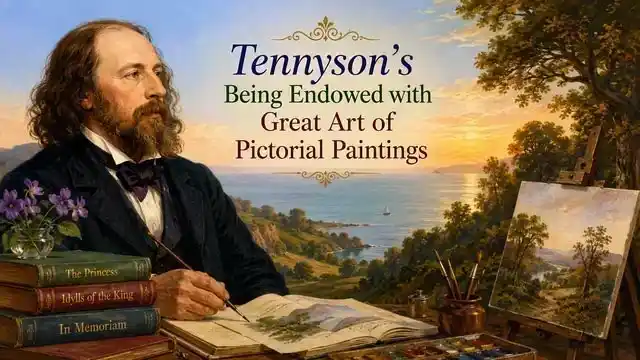
Alfred Tennyson stands among the greatest poets of the Victorian Age not only because of the depth of his thought and the musical beauty of his verse, but also because of his extraordinary gift for creating vivid and lifelike pictures through words.
Read moreTennyson’s Poem Break, Break, Break || Summary and Critical Appreciation
November 11, 2023
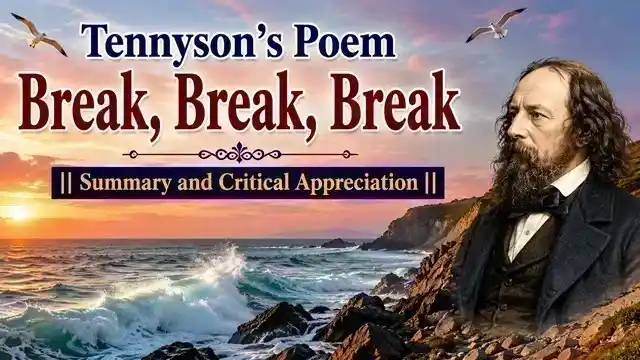
"Break, Break, Break" is one of the most touching and memorable elegiac lyrics written by the great Victorian poet Alfred, Lord Tennyson.
Read more