Critical Summary of Poem A Country by Jayanta Mahapatra
January 16, 2024
“A Country” (1983) by Jayanta Mahapatra is one of overtly political poems in which he suggests that suffering is universal, no matter what the social or the political order may be.
Read moreCritical Summary of Poem Grandfather by Jayanta Mahapatra
January 16, 2024
While in "Dhauli" Mahapatra deals with a significant historical omission, in "Grandfather" (1983) the disasters of the Orissa famine of 1866 are viewed from a biographical perspective.
Read morePoem Dhauli by Jayanta Mahapatra— Critical Summary
January 15, 2024
“Dhauli” (1979) is a sensitive account of the Kalinga War (261 BC) that wiped off thousands of lives to satiate a single individual's hunger for power.
Read morePoem Hunger by Jayanta Mahapatra | Critical Summary
January 15, 2024
In “Hunger” (from The Rain of Rites, 1976), the dramatic narrative, which unfolds in four taut stanzas, is based on the privations of a poor fisherman who drives his young daughter into prostitution.
Read morePoem Ghanashyam by Kamala Das, Critical Summary
January 15, 2024
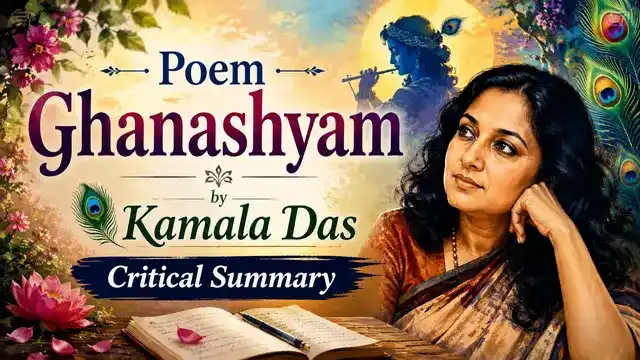
“Ghanashyam” appeared in Kamala Das’ Stranger Time (1977). Ghanashyam is another name for Lord Krishna, who used to play, frolic and flirt with women all of whom adored him; they would be ecstatic when they heard the notes he produced on his flute.
Read moreKamala Das’ Poem Luminol, Critical Summary and analysis
January 15, 2024
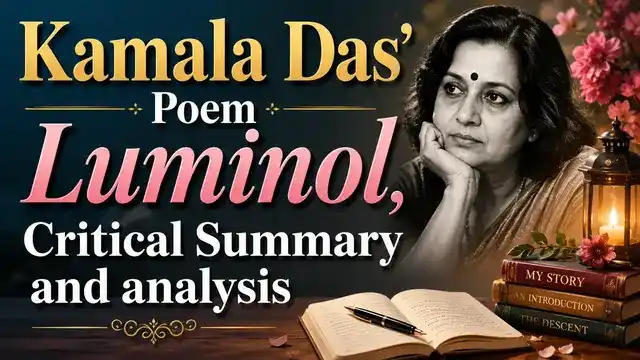
Luminol, taken from The Old Playhouse and Other Poems (1973), has been named after a sleep inducing pill.
Read moreThe Old Playhouse by Kamala Das, Critical Summary
January 15, 2024
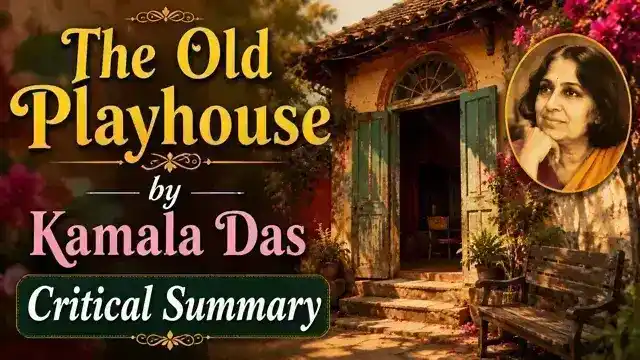
In The Old Playhouse, taken from The Old Playhouse and Other Poems (1973), Kamala Das recounts the unsatisfactory and disappointing conjugal life with her husband, and expresses her resolve to free herself from the prison of her husband's house.
Read morePoem The Dance of the Eunuchs, Summary and Critical Analysis
January 14, 2024
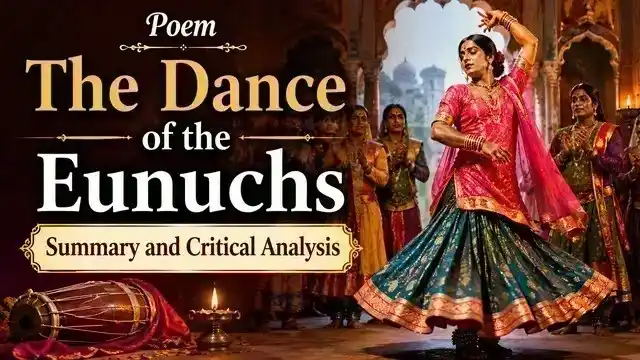
“The Dance of the Eunuchs,” The first poem in Kamala Das' collection of poems, Summer in Calcutta (1965), set the tone and the temper of all the poems in that anthology, the tone being one of frustration and the temper being the futility of love.
Read moreKamala Das’ Poem The Looking-Glass, Critical Summary
January 14, 2024
The Looking-Glass is one of the most celebrated poems by Kamala Das, a pioneering voice in modern Indian English poetry known for her fearless exploration of love, sexuality, identity, and the emotional struggles of women.
Read morePoem, The Invitation by Kamala Das, Critical Summary
January 14, 2024
The Invitation by Kamala Das is a deeply reflective and emotionally charged poem that explores the themes of love, desire, loneliness, and the search for emotional fulfillment.
Read more