Introduction of the Poem:
“Dhauli” (1979) is a sensitive account of the Kalinga War (261 BC) that wiped off thousands of lives to satiate a single individual’s hunger for power. Mahapatra does not hail the power and military exploits of Ashoka. His sympathy reaches out instead to the vanquished and the dead who find no mention in Ashoka’s rock edicts. The stream Daya that flows close to the scene of battle in Dhauli is said to have become bloody, filled with the butchered and mutilated bodies which the jackals and foxes feasted upon. The poem is elegiac in tone and speculative in style.
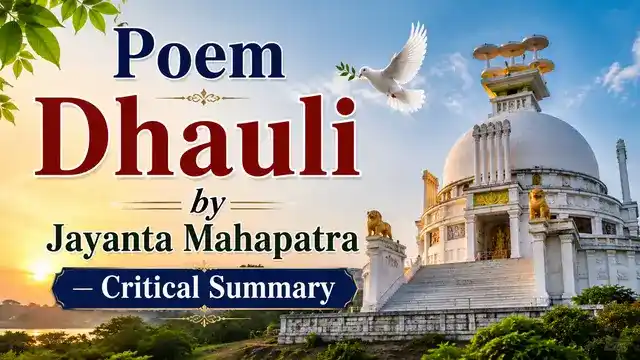
Critical Summary:
After the catastrophic wars of Kalinga were over, the barren fields of Dhauli were filled with the bloody but charred bodies of the dead. These slaughtered warriors not only satiated the hunger of power and suzerainty of a single individual (Ashoka) but also the insatiable hunger of jackals and foxes who ate into the limp genitals of dead men, although they were now infested with worms. Genitals here signify the virility of the vanquished warriors; they are “limp” because they have been defeated.
Years after the Kalinga wars were over, Ashoka installed rock pillars along the river Daya. These rock edicts described the horrors of the wars and Ashoka’s compassion, benevolence and pity; and his turning a Buddhist. The pillars are reflected in the shining waters of the river Daya. But edicts are as mute as cicadas, the shrill sounding insects that emerge after dusk. The elements have not forgotten the atrocities of wars waged by the power – hungry Ashoka.
In these rock edicts, there is hardly any mention of Ashoka’s regret and repentance at waging such bloody wars, or the emperor seeking forgiveness of the hundreds of thousands who were killed. The pillars thus stand a mute testimony to the pain inflicted by Ashoka on the innocent victims of carnage. They are a testimony to his lust for power and suzerainty.
Critical Analysis of the Poem Dhauli:
Introduction:
Dhauli is one of the most powerful historical poems by Jayanta Mahapatra. First published in his collection Waiting (1979), the poem revisits the aftermath of the Kalinga War (261 BCE) fought by Emperor Ashoka. Instead of celebrating Ashoka’s military victory or his later conversion to Buddhism, Mahapatra focuses on the forgotten victims of the war. Through vivid imagery, symbolic language, and a deeply elegiac tone, the poet exposes the brutal reality of violence and questions whether repentance can ever compensate for the suffering of countless innocent lives.
The Horror of War:
The poem opens after the war has ended, presenting a landscape covered with blood-soaked corpses lying in the fields of Dhauli. The poet deliberately avoids describing the battle itself and instead concentrates on its devastating consequences. The dead bodies, consumed by worms and wild animals, emphasize the inhumanity of war and the complete destruction of human dignity. Through these disturbing images, Mahapatra reminds readers that every military victory is built upon immeasurable human loss.
Sympathy for the Defeated:
Unlike traditional historical narratives that glorify victorious rulers, Mahapatra directs his sympathy toward the defeated soldiers and innocent victims. The poem gives a voice to those who remain absent from official records and royal inscriptions. The victims become the true heroes of the poem, while the conqueror is viewed critically. This reversal of historical perspective is one of the poem’s greatest strengths.
Critique of Emperor Ashoka:
Although Ashoka is remembered as a compassionate ruler after embracing Buddhism, Mahapatra questions whether his remorse was sufficient to erase the horrors he had created. The poet suggests that Ashoka’s suffering can never equal the pain experienced by the thousands who lost their lives. His repentance appears inadequate when compared with the irreversible devastation caused by the war. Thus, the poem presents a subtle yet powerful criticism of political power and historical glorification.
Symbolism of the Rock Edicts:
The rock edicts erected by Ashoka near the River Daya symbolize official history and political memory. While these inscriptions proclaim Ashoka’s transformation and moral awakening, they remain silent about the suffering of ordinary people. Mahapatra portrays these edicts as “vain words” that cannot truly express the grief of the dead. The contrast between the silent monuments and the painful memories preserved by nature highlights the limitations of historical records.
Powerful Imagery:
The poem is remarkable for its shocking visual imagery. Expressions such as the blood-stained fields, merciless worms, foxes feeding on corpses, and the trembling waters of the River Daya create unforgettable pictures of death and destruction. These images not only evoke horror but also reinforce the poet’s anti-war message. Nature itself appears to remember the violence long after human history has tried to forget it.
Themes of Memory and History:
One of the central themes of Dhauli is the conflict between official history and collective memory. History often records the achievements of kings and empires, whereas Mahapatra recalls the forgotten pain of ordinary people. The poem argues that true history must acknowledge the suffering of victims rather than merely celebrate political triumphs.
Anti-War Philosophy:
At its core, Dhauli is a powerful anti-war poem. It demonstrates that war never produces real victory because every conquest leaves behind death, grief, and irreversible destruction. Even the conqueror’s later repentance cannot restore the lives that have been lost. Mahapatra therefore presents war as a profound moral failure rather than a glorious achievement.
Poetic Style and Language:
Mahapatra employs free verse, simple diction, and highly symbolic language. His restrained style enhances the emotional intensity of the poem. Instead of making direct political statements, he allows vivid images and symbols to communicate the tragedy. The poem’s quiet, reflective tone makes its condemnation of violence even more effective.
Conclusion:
Dhauli is a profound meditation on war, history, and human suffering. Jayanta Mahapatra challenges conventional historical narratives by shifting attention from the victorious emperor to the forgotten victims of the Kalinga War. Through haunting imagery, symbolic depth, and moral reflection, the poem exposes the emptiness of military glory and emphasizes that no act of repentance can erase the horrors of violence. As an anti-war poem, Dhauli remains one of Mahapatra’s finest achievements, reminding readers that history must remember not only the conquerors but also those whose lives were sacrificed in the name of power.