Poem The Abandoned British Cemetery at Balasore | Critical Summary |
January 19, 2024
The Abandoned British Cemetery at Balasore is one of Jayanta Mahapatra's most profound and reflective poems, first published in his collection Relationship (1980).
Read moreJayanta Mahapatra’s Poem Total Solar Eclipse, Critical Summary
January 18, 2024
"Total Solar Eclipse" is one of the most remarkable poems by Jayanta Mahapatra, one of the foremost voices in Indian English poetry.
Read moreCritical Summary of Poem The Moon Moments, by Jayanta Mahapatra
January 18, 2024
"The Moon Moments" is another philosophical poem by Mahapatra. Although the word “moon” could here be interpreted as the beloved, yet it would be perhaps nearer the facts of the case to interpret it as meaning an ideal.
Read moreCritical Summary of Poem Exile by Jayanta Mahapatra
January 16, 2024
Exile is one of the most profound and introspective poems by Jayanta Mahapatra, a leading voice in Indian English poetry.
Read moreThe Whorehouse in A Calcutta Street | Critical Summary
January 16, 2024
Introduction of the Poem: “The Whorehouse in a Calcutta Street” is one of the most powerful and socially conscious poems by Jayanta...
Read moreCritical Summary of Poem A Country by Jayanta Mahapatra
January 16, 2024
“A Country” (1983) by Jayanta Mahapatra is one of overtly political poems in which he suggests that suffering is universal, no matter what the social or the political order may be.
Read moreCritical Summary of Poem Grandfather by Jayanta Mahapatra
January 16, 2024
While in "Dhauli" Mahapatra deals with a significant historical omission, in "Grandfather" (1983) the disasters of the Orissa famine of 1866 are viewed from a biographical perspective.
Read morePoem Dhauli by Jayanta Mahapatra— Critical Summary
January 15, 2024
“Dhauli” (1979) is a sensitive account of the Kalinga War (261 BC) that wiped off thousands of lives to satiate a single individual's hunger for power.
Read morePoem Hunger by Jayanta Mahapatra | Critical Summary
January 15, 2024
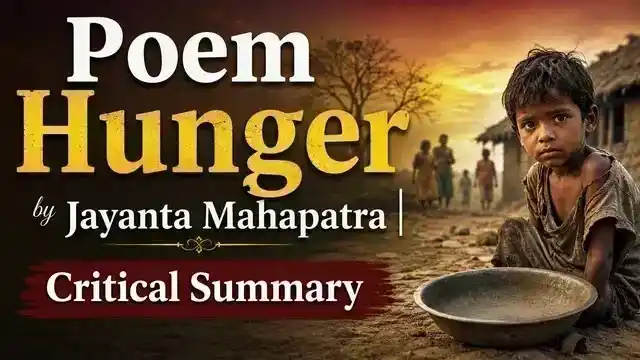
In “Hunger” (from The Rain of Rites, 1976), the dramatic narrative, which unfolds in four taut stanzas, is based on the privations of a poor fisherman who drives his young daughter into prostitution.
Read morePoem Ghanashyam by Kamala Das, Critical Summary
January 15, 2024
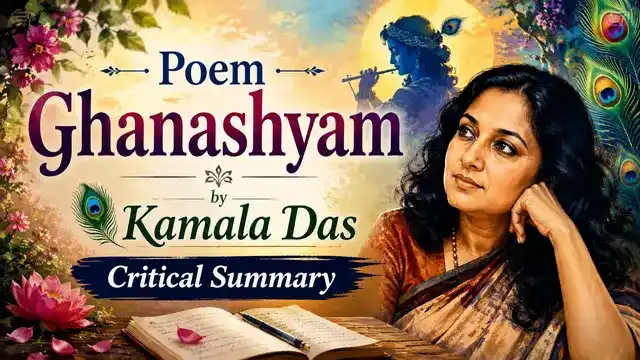
“Ghanashyam” appeared in Kamala Das’ Stranger Time (1977). Ghanashyam is another name for Lord Krishna, who used to play, frolic and flirt with women all of whom adored him; they would be ecstatic when they heard the notes he produced on his flute.
Read more