Summary of The Fire Sermon in The Waste Land by T.S. Eliot
December 19, 2023
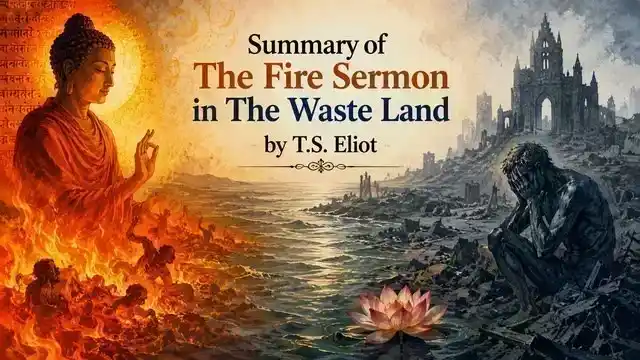
"The Fire Sermon" is the third and one of the most significant sections of The Waste Land, the landmark modernist poem written by T. S. Eliot and published in 1922.
Read moreThe Waste Land | Summary of A Game of Chess
December 16, 2023
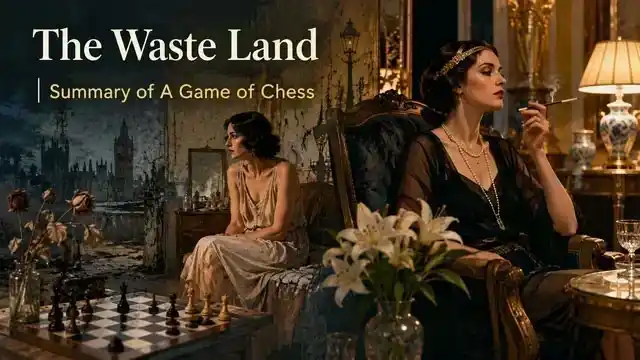
"A Game of Chess" is a device used by Middleton in the play entitled “Women beware Women” where this game is played to hide the seduction of a young girl by a noble man.
Read moreT.S Eliot’s Poem The Waste Land—Summary of The Burial of the Dead
December 16, 2023
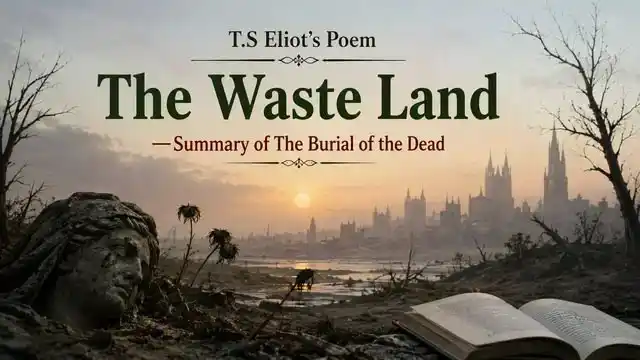
"The Burial of the Dead" is the opening and one of the most significant sections of The Waste Land (1922), the masterpiece of modern English poetry by T. S. Eliot.
Read moreCritical Estimate of the Poem, The Waste Land by T.S. Eliot
December 13, 2023

The Waste Land (1922) stands as the defining achievement of T. S. Eliot and one of the greatest landmarks of twentieth-century English literature.
Read moreCharles Dickens, a Marvellous Delineator of Childhood
December 7, 2023
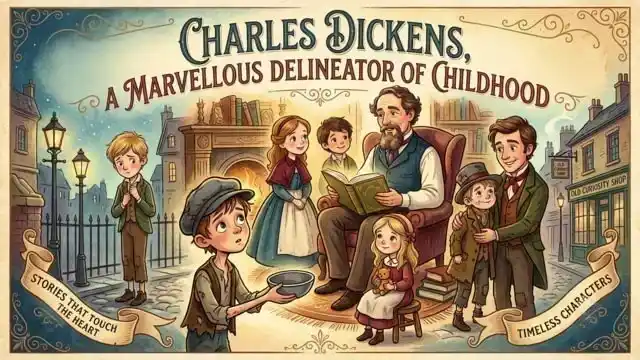
Charles Dickens is universally acclaimed as one of the greatest novelists in English literature and an unparalleled interpreter of human life.
Read moreCome into the Garden, Maud—Summary and Critical Appreciation
November 30, 2023
The poem “Come into the Garden Maud” is a love poem in a series of lyrics entitled “Maud; a Monodrama.”
Read moreG.M. Hopkins as a nature poet of Early 19th Century
November 21, 2023
Although Gerard Manley Hopkins (1844–1889) is often mistakenly associated with the early nineteenth century, he actually belongs to the late Victorian period of the nineteenth century.
Read moreSonnet Thou Art Indeed Just Lord by G.M. Hopkins— Summary and Critical Appreciation
November 17, 2023
The sonnet entitled "Thou Art Indeed Just Lord" was written on March 17, 1889. During that time, the poet was suffering from a sense of utter despair because he remained unsuccessful in the sphere of composing good and impressive poem.
Read moreG.M. Hopkins’ Poem Pied Beauty— Summary and Critical Appreciation
November 16, 2023
The poem “Pied Beauty” is a “Curtal” Sonnet with ten and one half lines. It is a devotional poem in the form of lyric.
Read moreThomas Hardy’s Poem Channel Firing | Summary and Critical Appreciation
November 14, 2023
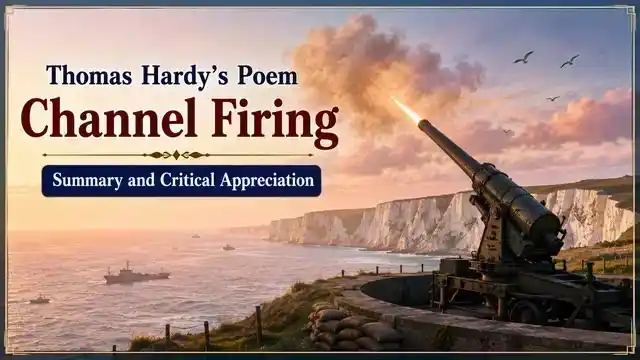
Thomas Hardy’s "Channel Firing" is one of the most remarkable anti-war poems of the early twentieth century.
Read more